Well, it seems like the schoolwork never ends, and honestly, the overwhelming number of powerful books with rich perspectives and deep theologies of hope and prophetic voices keep finding their way into the house. I just finished Rethinking Christ and Culture: A Post-Christendom Perspective by Craig Carter this morning en route to Black Theology & Black Power by James Cone for my Theology and Culture class. We've been reading some great stuff in this class, and we are finishing up by choosing a theologian of our choice and finding out how their culture informs and invites their theology and perspective. I have chosen James Cone, author of the above mentioned Black Theology & Black Power as well as a number of other books, including A Black Theology of Liberation which I will also be reading for class. Race, racism, race relations, history, and liberation theologies have been forever knocking around in my mind, and so I thought that it would be good to start close to home before striking out into a more global perspective (thus I'm starting with Cone).
Last night, Shey and I watched Jesus Camp, a documentary that focused on a fundamentalist and pentecostal prayer and evangelical camp for children (with some young pre-teens, e.g. 12 years old). It was a hard movie to watch, not because I don't think that such radicalism is capable of happening, but because I have finally realized the primary location of my frustration with the majority of the political endeavor as typically understood by evangelical Christians: Christendom is assumed to be both necessary and the primary means of the kingdom come on earth as in heaven.
In Rethinking Christ and Culture, Carter points out, that the downfall of H. Richard Niebuhr's work Christ and Culture is the assumption that Christendom, i.e. the alignment of the nation-state and the church, is the primary (and necessary) means of God's will being done on earth in coordination with the church. Jesus Camp highlighted this thinking clearly, when the leaders of the children's camp highlighted that these young ones would become part of God's army to bring America back to its Judeo-Christian roots and lead this nation in the fight against abortion and radical Islam. My question isn't whether necessary changes should be made to highlight the significance of human life in all places and the dangers of radical fundamentalism in any religion, but rather this: have Christians, of either the liberal (who hope that by co-opting the state for its own tasks, e.g. taking care of the poor) or conservative (who use the state to legislate its own moral views, e.g. abortion and homosexuality) stripe, placed their hope and power in the hands of a fundamentally distorted power which wields and controls its power by the sword, and is at its roots incompatible with the radical call of Jesus to nonviolence and discipleship?
I think that Carter's book offers a prophetic critique of the notion that Christendom was a profitable experiment for the church, and I think that Jesus Camp highlights the seriousness of the loss of perspective in the church and uncovers the uniqueness in the message of Jesus that finds hope in the Lordship of Christ, rather than the powers of this world. Just in case you haven't heard about this movie, which is very fairly done and has been well received by those in the documentary itself, below is a trailer. I highly recommend you watch this movie at some time. The filmmakers (Heidi Ewing & Rachel Grady) also directed Boys of Baraka, which I have posted on before, and which is an extremely powerful look at the state of the school system in Baltimore City and the long-lasting effect of racism. Below is a trailer for Jesus Camp.
Friday, April 27, 2007


Tuesday, April 17, 2007
God rid me of God
Chapter One of Rollins' work How (Not) to Speak of God is titled "God rid me of God" and is a rumination and exploration of idolatry. What is idolatry in light of postmodernism? How can our concepts of God become idolatrous?
As I start to write, I'm listening to The Arcade Fire's newest album Neon Bible, specifically the song "Intervention." If churches had organists who could blow up the organ like this in church, then by all means, bring back traditional instruments into the service as fast as possible! Sorry for the aside, but this album is awesome.
Back to Rollins. There is a lot to think about in this chapter, with a lot of the content dealing with epistemology (the study of how we know things). What do we mean when we say we know God? Do we believe that we know God as God really is? Is that even possible? One of the great insights that postmodernism has helped to develop, and Rollins clearly calls for this, is a high level of epistemological humility. What we know about God must be girded by a deep-rooted humility that acknowledges our limits in understanding God as God really is. This does not mean that we don't need to try to know God, but rather come to the place where we can realize that our understanding and knowledge of God is good, but always limited and wrapped in mystery. Rollins writes at the end of the chapter:
"In short, the emerging conversation is in a unique place to acknowledge the long-forgotten insight that God hides in God's visibility, realizing that revelation embraces concealment at one and the same time as it embraces manifestation and that our various interpretations of revelation will always be provisional, fragile, and fragmentary. While all of the Church has maintained that there is a revealed and hidden side of God, the difference here is that we are rediscovering the Barthian insight that even the revealed side of God is mysterious (pg. 18)."
Rollins points out that it is necessary for us as Christians to realize that "God hides in God's visibility," that is, that even the parts of God God shows us, we see in part, never in full. This should raise some questions about whether God is far away, or able to be known at all, and this will be discussed in further chapters, but I'll end with an illuminating comment by Rollins:
"Hence revelation ought not to be thought of either as that which makes God known or as that which leaves God unknown, but rather as the overpowering light that renders God known as unknown (pg. 17)."
Tuesday, April 10, 2007
where to go from here?
Shey and I finished, on Easter of all wonderful days, the series Six Feet Under we have been watching for quite awhile now. There really aren't words to express just how amazing this show was. If you haven't watched it, give it a try. Creative and executive producer of the show is Alan Ball, the writer of American Beauty (which was the Oscar-winning precursor to this show). I don't want to build it up to much, b/c you might hate it. But it really is the best show I have ever watched. It is heavy at times, but never without hope. It is complex, without trying to make things too hard. A beautiful show, definitely for mature audiences.

I can't believe it is over. I don't know where you can go from here in terms of quality TV shows? Any suggestions?

I can't believe it is over. I don't know where you can go from here in terms of quality TV shows? Any suggestions?
Friday, April 06, 2007
last day at the beach
Well, this isn't the way you typically like to end your bout at the beach, with a bit of cold weather, but we had a good day and tried to make the most of it! We've had a good week, and if you haven't checked out the pics from yesterday, there are some cool ones with alligators, besides all the birds that may be boring to you! Below are a couple of others I snapped today, a sweet brown pelican (one with a friend) and an osprey. Hope things are well with all as we prepare for Easter...peace.


Thursday, April 05, 2007
a glimpse of our day
hey folks,
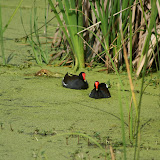
here are some pics from our recent trip to Pinckney Island, a wildlife refuge near Hilton Head Island, SC where Shey and I are taking a little vacation and enjoying our spring breaks from school. As you can expect there are more bird shots than most anything else, but there are a few gators too. sorry for the break from Rollins, i had too many books to bring for school to read at the beach, not to mention books to learn how to garden. but i'll start back up after i get home next weekend. i hope everyone is well, i feel like there is a lot to talk about--a lot of hopes i have for how gardening will bring some whole-life transformation...i love birds more than ever, and i am really enjoying marriage with Shey (vacation with her is just so much fun, and so relaxing).
enjoy the pics...peace.
 | ||
| Pinckney Island |
Thursday, March 22, 2007
Introduction to Part 1 of How (Not) to Speak of God
The introduction's title helps introduce us to the deep thread that ties the book together:
Heretical Orthodoxy: From Right Belief to Believing in the Right Way
This book is written in two parts. Part One is a collection of theological and philosophical reflections, riddled with parables, stories, quotes from other authors, mystics, philosophers, theologians, and Rollins' himself. Similar in how Brian McLaren makes the point that theological and philosophical ideas can be perhaps more subversive in parables and stories in The Secret Message of Jesus, Rollins employs this tactic throughout Part One of the book. The parables don't stop there however. Part Two of the book is a collection of 10 services that Rollins' has participated in and probably helped create with his community called Ikon in Ireland, that bring out the themes, theologies, and philosophies in the first part of the book, while stirring up our imagination with more stories and parables to illuminate, however darkly, the ideas from the first section of the book.
Today, I'd like to just begin conversing about the introduction to Part One...perhaps this will help others like me, I feel like I need to keep the ideas and notions in manageable chunks, both to be able to have conversation about them, and also to digest the rich thought in the book. So I thought I'd throw out another quote, that sticks out to me from the introduction to Part One (in which Rollins' is setting up his aims for this section of the book):
"Here I picture the emerging community as a significant part of a wider religious movement which rejects both absolutism and relativism as idolatrous positions which hide their human origins in the modern myth of pure reason. Instead of following the Greek-influenced idea of orthodoxy as right belief, these chapters show that the emerging community is helping us to rediscover the more Hebraic and mystical notion of the orthodox Christian as the one who believes in the right way--that is, believing in a loving, sacrificial and Christlike manner. The reversal from 'right belief' to 'believing in the right way' is in no way a move to some binary opposite of the first (for the opposite of right belief is simply wrong belief); rather, it is a way transcending the binary altogether. Thus orthodoxy is no longer (mis) understood as the opposite of heresy but rather is understood as a term that signals a way of being in the world rather than a means of believing things about the world (Rollins, pgs. 2-3, italics and bold mine)."
I think that this notion of orthodoxy, as right way of living and believing hits at the heart of what I've thought for some time now. I have struggled a lot with Reformed theology and the whole predestination/free will thing for a long time, though it has become much easier in the last few years, largely because of this nagging suspicion that orthodoxy was never about having all the right beliefs lined up in a row to show God (or others). Rather, orthodoxy was the way in which we are called to live and love in the likeness of Christ. This helps to free us from the fear that if we don't believe all the right things, or are "led astray" on a certain doctrine, that we can find hope in that orthodoxy is rooted in the way we live and believe, rather than in what we believe, which bypasses the whole, "say the sinner's prayer" or before you can be saved you must believe 1, 2, and 3.
How does this sound to you? Orthodoxy as right living and believing rather than having a fixed or proper set of beliefs that are all "correct" (if we can even be perfect or correct in our doctrines about God)?
Tuesday, March 20, 2007
Bright Sadness
Lent is well on its way, and thus far it has been a great experience. Soda hasn't been nearly as hard not to drink as I anticipated, although not buying any new music has been harder than I thought...I forgot that Arcade Fire's Neon Bible was coming out...anybody gotten their new album? It's gotten great reviews thus far...
As I mentioned before, Lent is traditionally called "Bright Sadness" in the Orthodox tradition, and after a few weeks of exploration into apophaticism, this notion of Bright Sadness has come to more adequately explain this time of Lent during this season of the church year for me. It has marked a period of my life rampant with dramatic change during the last few years and last few months. The Bright Sadness of this time of advent (or Lent), this time of waiting and participating in joining Christ in his sufferings, has brought great illumination, and yet sadness too. There have been moments of recognition and brightness that have reminded me of the importance of spiritual disciplines and obedience, rooted in humility, and a deep reverential silence that have shaped my life since childhood. Yet there have been periods of sadness and grief over the changes from where I've come from, and the loss of former perspectives. There has also been sadness in the changed relationships that have stemmed from deep theological shifts in the last five years, that have made it difficult to continue to perpetuate perspectives that no longer urge me along the journey of faith. And while I grieve in a way the loss and change of certain relationships in that they don't remain the same or rooted within a particular time and place, I also rejoice, for the journey of faith is also bright and illuminating. There is truly a sense of Bright Sadness right now--i.e. I am seeing life in new ways, yet there is a sense of loss, and I am changing and finding God in new ways, yet the relationships around me are also changing.
I've realized that it is important for me to wrestle with some more of these thoughts, and so I've decided to start blogging through Peter Rollins' book How (Not) to Speak of God. This book has been a breath of fresh air, and has helped put into words many of my thoughts that I had yet to find words for, and also stretched me in new ways. Combine this book with some of the best lectures and discussions of my seminary experience on Apophatic Theology from the last few weeks, especially as seen expressed in Pseudo-Dionysius, and bright sadness takes shape in powerful ways.
This should be fun and challenging, and for my friends and family reading this, if there are words that don't make sense, let me know. I know that I have yet to "define" apophatic theology (or for a Wiki definition, click here), and I will come to that, but for now, I'd like to quote a bit of the introduction of Rollins' book, that I won't even comment on tonight, but would simply like for it to ruminate and give shape to the coming discussion. This is found in Rollins' introduction, and explains his reasons for being drawn to mystical theology, which shapes a large part of the book and which illuminates much of my own perspective of how this dialogue about faith, church, the kingdom of God and so much more should take shape. This quote is in reference to Rollins trying to explain why how we (don't) talk about God is important:
"Each time I returned to the horns of this dilemma, I found myself drawn to the Christian mystics (such as Meister Eckhart), for while they did not embrace total silence, they balked at the presumption of those who would seek to colonize the name 'God' with concepts. Instead of viewing the unspeakable as that which brings all language to a halt, they realized that the unspeakable was precisely the place where the most inspiring language began. This God whose name was above every name gave birth, not to a poverty of words, but to an excess of them. And so they wrote elegantly concerning the limits of writing and spoke eloquently about the brutality of words. By speaking with wounded words of their wounded Christ, these mystics helped to develop, not a distinct religious tradition, but rather a way of engaging with and understanding already existing religious traditions: seeing them as a loving response to God rather than a way of defining God (Rollins, xii)."

amen.

amen.
Tuesday, March 13, 2007
a convergence of sorts
there are always times in life when things seem to be converging in a way that help some of the often seemingly random experiences of life fit together in great ways. i've nearly finished How (not) to Speak of God by Peter Rollins, we are studying Pseudo-Dionysius (with a reading in class tonight about how mystical and apophatic theology is connected to postmodernism in my historical theology II class), and in one of my seminar classes last night called "Who is God?" my professor seemed to hint at the Derridian notion that the spirit in receiving a gift is more significant than the gift itself, a strong theme in Rollins' book...
I've also been struggling a lot with categories of late which i think has led finally to some of the above pieces fitting together, e.g.: categories with which are appropriate to talk about God, the difference between religious and scientific categories and how to talk about the difference with my friends who are not yet believers, language games, and the limited understanding of the revelation that we can understand. I've decided to write my research paper for this second of three historical theology courses on Pseudo-Dionysius and his work Mystical Theology. (my seminary doesn't have systematic theology, we instead study the content of systematic theology as the doctrines and perspectives develop over time through the course of history, philosophy, and theology. after two introductory courses which help to give a very, very broad overview of some of the theologies and doctrines that will be discussed, we are required to take Historical Theology I: Patristics, II: Medieval, and III: Reformation and Counter-Reformation to Contemporary. I have to say that I really appreciate this method of studying the plurality of perspectives deemed orthodox by the church and one of the reasons i chose The John Leland Center was for these courses, and the practice of rooting our perspectives in particular contexts and histories. It helps to show the complexity of issues rather than making things black or white.)
on a side note: i should probably not use the word "convergence" and not point people over to my good friends Todd and Lisa who are co-pastoring a church re-start called Convergence. They are doing some great stuff, and I highly recommend hanging out with their theologically imaginative community if you get a chance. better yet...create some art with them, get involved in acts of justice, and stick around for some great conversation.
lastly, i think that i'm realizing so many of the differences that arise in the conversations about the character of God, epistemology, categories, ecclesiology, and missiology arise out of differences in understanding the authority and role of scripture in church community. one of the downsides and things that i am trying to be careful not to do as i'm enjoying a brief respite of some issues and while some of my understandings and theology is coming into a time of better (yet certainly not even close to clear) focus, i want to be careful not to inflict violence on the other (especially in class) by falling into the fundamentalist trap of believing that what i perceive to be "right" thinking puts me in a better place or makes me of more value than the other who is trying their best to make sense of their theology in their particular context. it's been a great time as some of the dots have started to connect, but a humbling time as well, where the draw towards arrogant belief or "better belief" or "more correct perspective" in light of my relationship with others who do not and may never agree with me is strong. this has challenged me in class...especially in ethics and "Who is God?" to listen before disagreeing or speaking out. maybe that's why the dots are starting to connect in the first place?...
Thursday, February 22, 2007
Henry (HT), my favorite barn, and Ash Wednesday

Well, i'm back in Warrenton after the trip to San Diego...upon which i returned to the week of ice, i'm finally back to writing again (though I'm sure school will take over my blog again soon). First, i wanted to introduce you to my latest friend Henry (Hermit Thrush). Shey has a funny and fun habit of naming everything, staplers, animals, cars, etc. and I beat her to the punch in naming one of the most fun birds that has come to the house yet. I first met Henry in the forest behind our place. He followed me around the forest, curious, and trying to communicate...shrugging his wings and flapping his tail at me. This was over a month ago, and yet with all the ice we got last week, the birds have been struggling to find some food and so I think Henry came all the way to the house for the first time in search of food. He's been hanging out by our front door, has followed me down the driveway, and comes pretty close...he's one of the most curious birds i've been around. so, i thought i'd share a picture of my latest favorite bird...
below is my favorite barn from the drive to our house from town. the sun came out for the first time in forever yesterday, and i just absolutely love the way the sun hits buildings and trees in the winter. and finally, the sun was hitting the barn in cool manner yesterday and i got to snap a few pictures. the farm estate is up for sale where this barn sits and Shey and i dream about living there one day. it is a wonderful piece of land.
below is my favorite barn from the drive to our house from town. the sun came out for the first time in forever yesterday, and i just absolutely love the way the sun hits buildings and trees in the winter. and finally, the sun was hitting the barn in cool manner yesterday and i got to snap a few pictures. the farm estate is up for sale where this barn sits and Shey and i dream about living there one day. it is a wonderful piece of land.


Lastly, for the first time in my life i am participating in Lent or as the Orthodox call it "Bright Sadness." something had been stirring in my spirit to participate this year and to try to understand a bit better what it means to join the church in this season. the youth talked about it last night for about an hour and they really seemed to catch on with the spirit of Lent. they were willing to fast and be disciplined with some areas of their life that i don't think that i'd have the desire to hold to. i am really proud of them. as baptists, many of them have never done anything even remotely close to this, and yet they seemed to understand the significance immediately. i had them (if they chose to participate) write down what they would like to fast and be disciplined about on a piece of paper of which we then burned and i used to mark their heads and bless them. it was pretty neat. after we had finished, one of the students asked if i would like to be marked as well...so that i too could be included. and two of the students made the mark on my head and blessed me...i can't imagine a better first time of beginning Lent.
i am fasting from all soda and upon Shey's recommendation, not purchasing any new music. i'm looking forward to this time, and hope that this practice may become a more regular one for me in the coming years...
i am fasting from all soda and upon Shey's recommendation, not purchasing any new music. i'm looking forward to this time, and hope that this practice may become a more regular one for me in the coming years...

Friday, February 09, 2007
Mr. Deity and Mr. Pagitt
Two great things happened today, both of which are related to Doug Pagitt actually. First...I went to a seminar led by Doug today called A Theology-Shaped Church : Ministry Beyond the Pragmatic that was really good. Doug raised a lot of interesting questions about the methods and hopes of many faith communities today that are simply trying to become "authorized re-tellers" of the gospel story rather than theologically imaginative communities in the way of Jesus. Central to this distinction is the missiological hope that seeks to include those who have questions by inviting and including them into the community (which implies a say in the life, direction, hopes, and aspirations of the community) through relationship rather than orthodoxy or orthopraxis as prerequisites for inclusion or a voice in the community. (Think Ortho-centric or boundary sets of community living in contrast to relational connection.) Doug pointed out that although churches and faith communities are trying to say that "spiritual" or "faith" conversations aren't happening, they are right in that those conversations aren't happening in the very place you'd expect they should be happening, that is within the church, but that they are happening very well and very intelligently outside of the church. Which brings me to Mr. Deity. Whatever you're doing, stop now and both go to the website (click on Mr. Deity.). And then using whatever podcatcher you have, subscribe to the Mr. Deity podcast and download the 5-6 video casts. Hot dang they are funny and poignant. Seriously, don't walk away from your computer until you download at least the first video-cast "Mr. Deity and The Evil."
I'd love to hear what you think of these videos, they are hilarious and really quite brilliant. Doug showed a couple in the above seminar and they stirred up a lot of laughs and great conversation about the theological task ahead of the church.
After the seminar I got to sit down with Doug and Todd and Brady (Todd's son) for about an hour and a half today to talk about church planting, new expressions of theologically imaginative communities, my paper discussing how our eschatology affects and informs the spiritual formation of our communities of faith, we shared stories, laughed, talked about Todd's (and Lisa's!) church restart Convergence, and more. Doug is a really great guy, and is awesome for taking some time to hang out and chat. If you're ever in the Minneapolis area you should visit and check out the community he is a part of called Solomon's Porch. This includes my brothers who freakin' live so close by...go check it out.
It's my last night in San Diego, and it's been a fun day. It's been a lot of fun hanging out with the Cullop's and has been cool getting to know Todd's family better. Not sure what will be going on tonight, but am hoping to check out one of the movies up for picture of the year...we'll see.
Wendell Berry and Theological Turnings...
I probably also should have titled this post: UNC came back and beat Duke last night, boo-ya. Anybody else see the heels come back and beat Duke at Cameron Indoor last night...that was awesome.
Well, there is so much stirring inside of me after reading Wendell Berry's collection of essays titled Sex, Economy, Freedom & Community: Eight Essays that I feel like I could share a little from every essay and it could provide fodder for months of conversation. As I sit out on the balcony in Sand Diego on this cool night, with the palm trees near by and the hills around me, it is still amazing to think how timely and appropriate Berry's collection of essays are for today. One of the most interesting essay's of the bunch was called "Peaceableness Toward Enemies." Let me just quote the second idea, which it is important to note that Berry wrote this in 1991 after/during the Gulf War:
II. "This latest war has been justified on a number of grounds: that it was a war to liberate Kuwait; that it was a war to defend "the civilized world" against a dangerous maniac; that it was a war to preserve peace; that it was a war to inaugurate a "new world order"; that it was a war to defend the American Way of Life; that it was a war to defend our supply of cheap oil. These justifications are not satisfactory, even when one supposes that they are sincerely believed." (pg. 69-70)
and also in part III.: What can we mean by the statement that we were "liberating" Kuwait? Kuwait was not a democratic nation. If it was imperative to "liberate" Kuwait after Saddam's invasion, why was it not equally imperative to "liberate" it before?...
The similarity in language and rhetoric used by both Bush presidents to lead the country into war is kind of scary. Or maybe it is a good thing, I guess the son listened to the father? All this to say, I think Berry raises some interesting points, first in questioning the justifications for going to war and the motivation in timing. I think both justification and motivation are questions that should continue to be asked about the current "liberation" attempts by our government.
Today I went to a seminar led by Brian McLaren called: Theological Turnings: Profound Questions that Younger Leaders are Asking About Theology (that Go Deeper than Candles and Goatees). I always enjoy hearing Brian speak and it was interesting being in a room with a lot of older pastors and church leaders and hearing the questions and comments, and often doubts with the way in which my generation, and young leaders (like me, you know I'm only 24) are beginning to express some theological turns. Which again leads me back to the ideas of what i want to explore in my paper for this conference: How does eschatology and the theological system which it is situated within influence the spiritual formation of the community which holds to that theological vantage point? Brian mentioned that he believed that there are five significant theological shifts taking place with younger leaders, one of which is a change in eschatology which will influence ecclesiology and formation of community. What kind of relationship should take place with eschatology and spiritual formation? How should it change from its current situation (if it needs to change at all)?
Thursday, February 08, 2007
New Monasticism, The Bible, and Pastors
Day #2 has come and gone at the NPC. first and foremost I have to say, that the Critical Concerns Course that Todd and I went to discussing a "Return to The Bible" has been really good. More than that, Brian McLaren is such an awesome guy. His humility and generosity never cease to amaze me...he told a story today that some of you may have heard, he shared it at the annual meeting for our association, and it may be on one of the emergent podcasts. it's the story about the pastor who is excitedly talking about how Jesus and the saints are going to come in with swords and kill those who are not Christians in ushering in the kingdom of God and heaven from Revelation, without taking into account the type of literature Revelation is.
one of the most moving parts of the course this morning was in our discussion of how we might learn to read Revelation missionally:
one of the most moving parts of the course this morning was in our discussion of how we might learn to read Revelation missionally:
How to read Revelation missionally? We recall and stand up preaching the word of God, preaching the
secondly, i met Karen Ward today, the abbess of Church of The Apostles, who is a really cool woman who led a seminar called: The New Monks: “Whole-Life” Discipleship for Emerging Churches. as i mentioned before i'm at this conference partially for seminary, and one of the relationships that i have been thinking a lot about and am probably going to write my paper on is the relationship between eschatology and spiritual formation in the church. as both Karen mentioned in the conversation we had after the seminar and in the above example of how to read Revelation missionally, an eschatology that beckons us forward in hopeful redemption and co-creation in the world today, not just hope for a disembodied soul in some heavenly realm of existence, is essential in forming new practices and healthy practices in our churches. our eschatology informs so much of the way the church structures and organizes its spiritual and physical life together. i'm reading Doug Pagitt's Church Re-Imagined along with Andrew Perriman's The Coming of The Son of Man: New Testament Eschatology for The Emerging Church along with Peter Rollin's How (Not) to Speak of God in hopes to fuel this conversation of the influence of philosophy, culture, eschatology and spiritual formation upon one another. i find it to be a fascinating relationship that could influence a lot of the vision and life of churches. any thoughts on this relationship...?
Wednesday, February 07, 2007
With So Much Drama in the NPC...
Well, not really. Not much drama yet at the NPC (National Pastors Conference) which I'm currently attending for class and spiritual growth and training...etc.
I've nearly been up 24 hours as I write this, and I told a few people that I'd try to share some of the in's and out's and going-on's as I hung out in San Diego and got to be with some emergent type folks for a few days, and figured I better start today posting or the week will slip by.
honestly, with the last month off of school, and having finished a few books in the month off, I feel like i've had a lot i've wanted to share, yet haven't found the words for a lot of it. maybe part of it is that i'm still figuring out what is good for me to share on the blog. maybe part of it is that i've been taking pictures of birds? part of it is that i put a lot of pressure on myself to say something significant that will contribute to "the conversation" but sometimes i have some processing to do before i say anything out loud. and part of it is that i finished a collection of essays by Wendell Berry titled Sex, Economy, Community, and Freedom: Eight Essays that was humbling, convicting and contextually appropriate for much today's issues (war in
i'll post more on Berry maybe tomorrow, since i finished that book as the last of my "i'm not in school right now and can read whatever i want list" on the plane this morning. but tonight, i'd like to stir the pot a little with a metaphor from the critical concerns course i went to today and will finish tomorrow led by Brian McLaren and Richard Twiss called "Return to the Bible". Twiss, a Native American of the Sioux people is co-leading the seminar with Brian and the first 5 hours of the course have been great thus far. they started with taking questions and surveying the group to learn about where many of the people at the seminar were coming from and then went on to first describe the need to move out of a foundational epistemological system in a more post-modernist epistemology that constructs a web of knowledge and understanding rather than a wall or foundation.
beyond all that came what i thought was a profound missiological insight and metaphor recalled by Twiss and told by many as a Mission Legend: Bring the gospel as a seed into an indigenous culture, rather than as a potted plant, so that when the gospel which was planted as a seed begins to surface it will be expressed and understood as a manifestation of the indigenous culture. I think that this is a truly beautiful and wonderful metaphor, and offers profound insight into the necessity of preserving the relationship between culture, theology, and the gospel. this is especially true in light of Twiss' heritage and story riddled and tarnished with the story of "Christians" destroying much of his community and chance for redemption of Native American practices, not to mention the need for a contextually appropriate mission amongst the people first occupying the country to its own people without being oppressed. any thoughts?
Monday, February 05, 2007
rock the vote!
Hey friends,
If you haven't already, it is time to vote. Friends of mine from the band Harp 46 who helped lead worship at the last senior high retreat, have been at many of the great emergent conversations/conventions and other events...and are just freakin' cool...have let me know that Nuc's book Understanding Groove is up for some awards in a couple of places. Nuc is the percussionist along with Posido on bass and April on harp to make up Harp 46. If you have had a chance to hear the band, know them at all, or just want to help out some friends of mine...take a minute to vote for Nuc and his book as the best book on drum theory to come out last year.
Here's where to go:
1. DRUM! Magazine Poll: Go here, and then go to question #38- you have to click on the "submit" arrow to get to the next page of questions... but you do not have to answer ANY other of the questions to do this. On Question #38, scroll down to highlight the book titled "Understanding Groove" and then click submit and you're done.
2. Modern Drummer Poll: Go here, and after filling out your information for registering for the poll, be sure to UNCHECK the box if you would not like to be put on their mailing list. Scroll down to "Method Book" and the book title is "Understanding Groove" and the author is "Nucleo Vega."
The deadline to vote is April 15th, but take the time and vote today!
Here's a pic of the band from the fall retreat last year:

Wednesday, January 24, 2007
in light of recent technical difficulties...
Well, part of the reason I've been soooo slow in posting is that the new Beta Blogger in co-operation with Picasa, has not been making my life (or many others) life very easy in posting pictures. I've been struggling for a while to get it taken care of, and that day has finally come. So here's another post, one which I've been anxious to share for a while now.
My lovely teacher wife and I moved in the fall (Novemberish) to a new place, a bit outside of town, but absolutely beautiful. We hoped that moving to Jefferstonton would provide a more quiet and open space for us to create, whether in photography, simply enjoying creation, or writing papers, painting, or our new favorite joy--birding. Here are a few pictures from some walks or from the drive home that either the lovely teacher wife or I have taken. The barn and silo is near our place, and a wonderful sight in the winter sun. The bluebird was a fun sighting on another walk one afternoon. And the last two shots are from the drive to and from town.
If you haven't read any of Wendell Berry's novels yet...I hope these pic's inspire you to do so!


snow day!
Well, I'm just going to be up front about this:
I've become a birder.
I know, I'm a dork, and I've dragged my wonderful and much less dorky wife down into the depths with me...but it is true. I just love it. And let me say that when it snows, the birds go crazy. I think they realize that they are going to have to consume a lot of food to stay warm (and alive) through the night. This is all to say, on the snow day this weekend, we saw more birds at the feeder at one time than ever before. We didn't see many new species, but we saw a lot of interesting interactions at the feeder and on the ground below the feeder. I won't bore you with much more...I will share a couple of my favorite picks from the snow day (which was awesome by the way...a needed break!).


Saturday, December 16, 2006
to remember the good times...(a look ahead to MN?)
So I was reading over at one of my favorite blogstops about this fantastic new piece of shoddy commercialized Christian junk...
Dad...are we going to remember and reflect on a wonderful childhood filled with Rocky movies when I get to MN by not only seeing the delightful new installment of boxing drama, but also could you get the leadership kit to walk us through the movie as a family to discuss its "Christian" values? Please?
Don't get me wrong, I used to watch Rocky 4 before soccer games my junior year of high school to get "pumped up" for games...I mean, nothing gets me more thrilled to play soccer than watching a completely over-matched American boxer single handedly defeat communism by whipping the steroid-taking giant boxer of communist Russia.
Are we Christians really that gullible? Should I even ask? In case you haven't seen the trailer yet...enjoy:
Thursday, December 14, 2006
semi-pelagian?
We're down to the end of the semester, with class tonight and finals next week. Things never seem to quite slow down as much as you think they could or should...but I'm looking forward to being on the other side of next Thursday when I take my last final and turn in my Historical Theology paper on Origen and his method of biblical interpretation.
Two things I've come to realize thus far in Historical Theology I (which is the class where we study the development of theology and doctrine during the patristic time period, i.e. Augustine, Origen, Justin Martyr, Clement of Alexandria, Pelagius and many more) are:
1) I tend to enjoy studying the theologians and church leaders who were declared heretical on certain doctrines.
2) I think Pelagius got a bad rap.
I'm reading a lecture on Augustine's perspective on foreknowledge and predestination and it reminds me of all the great "conversations" that took place in college about this stuff. Really...reading all this stuff stirs up a desire to read more Eastern theologies...anybody know some good books? (I'm getting How (Not) to Speak of God by Pete Rollins for Christmas...which should be a good look at some apophatic theology.)
Wednesday, December 06, 2006
something in the water?
So in the last two days I've had some of the best conversations with students that are unlikely to discuss some of the following topics, that I've had since I've been here as youth pastor. One student who is home-schooled and comes from a rather conservative background and story, asked me point blank about my thoughts on the War on Terror and our president's actions regarding specifically the war in Iraq yesterday. And with this student, who rarely talks about much else besides Lord of the Rings, Star Wars, and role playing...we embarked on a journey of discovery of some of the great history in our Baptist tradition, our history as Christians, and the value of a prophetic voice and keeping a critical distance from power structures...it was amazing.
Tonight at youth there was a riled up time of prayer requests. One student asked that we pray for the mostly immigrant workers at the local psuedo-fast food place who he works with that he thinks work just as hard as his managers yet make thousands less dollars. This same student also prayed that as a church we would begin to become more doubtful and not just accept everything that is passed down to us, but that we would thoughtfully and generously question our beliefs so that we might be changed by our beliefs and perspectives. Also tonight, a different student asked that we pray for the leadership of our church, and that we might ask why people of other races and other sexes are not in places of leadership at our church. Wow.
Of course, another student (from this same home-schooling family) went on tonight to then talk about how God has a plan for everything, and when I raised some questions about this view, and pointed out how the church has never agreed on this...This student went on to say that she wasn't sure why I was the youth pastor (or possibly if I was even a Christian)if I didn't agree that God was "omnipotent" or "all-powerful" in the ways that she believed God to be all powerful and omnipotent. Oh well. I'm still glad to have the students talking for real...even if this doesn't happen all the time. It's nice to hear their voices...
Thursday, November 30, 2006
Potential Worship Band
If I ever start a church, this will be the first band that I try to bring in as a prospective worship band. Check their website out: The website for the best worship band ever!
And better yet, check out a song from their live set (you can watch this above, or click below), featuring my new favorite worship song titled: Trinity Schminity. Don't skip out on the song before the guitar solo...and as a taste of what's to come, one of my favorite lines is:
"Trinity Schminity, don't believe a lie
Trinity Schminity, cuz' if you do
Your soul will surely fry..."
Hands will be raised everywhere. Eyes shall be closed. And everyone is going to grow amazing long beards.
Subscribe to:
Posts (Atom)